

Microsoft’s shareholder lawsuit over aggressive AI spending has put the company’s financials under a microscope — and if you rely on Microsoft 365, it’s worth understanding what’s actually being disputed and what it could mean for the prices you pay. The case centres on claims that Microsoft misled investors about slowing Azure growth and ballooning AI infrastructure bills, and it has already rattled markets significantly.
What the Microsoft 365 Shareholder Lawsuit Actually Claims
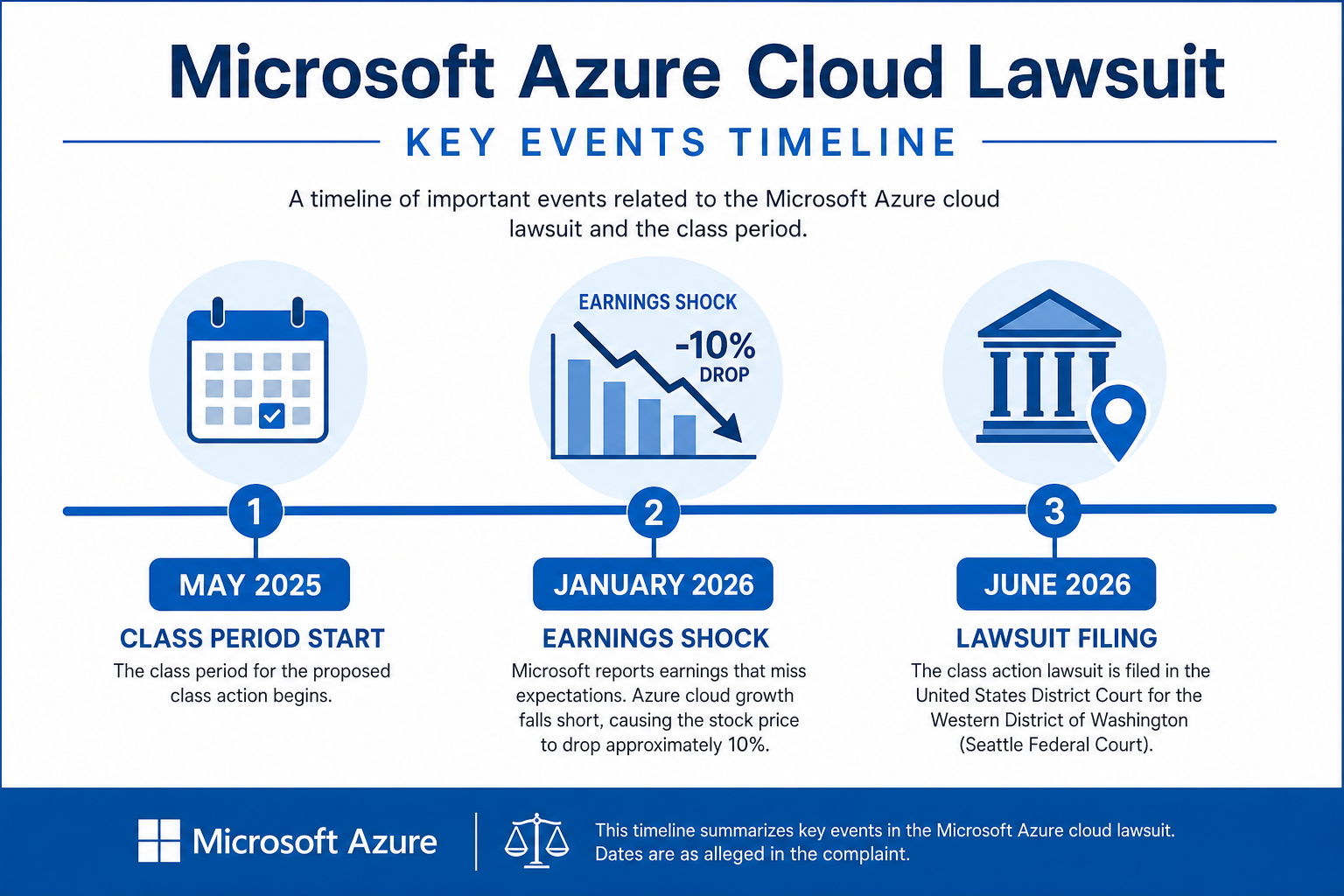
The class-action lawsuit was filed in a Seattle federal court in June 2026 by a Michigan pension fund — specifically the pension fund for police and fire department employees in St. Clair Shores — and names several senior Microsoft executives as defendants. The proposed class period runs from 1 May 2025 to 28 January 2026, covering a window when, according to the complaint, Microsoft made public statements that allegedly overstated Azure’s growth trajectory while downplaying the cost pressures of its AI infrastructure push.
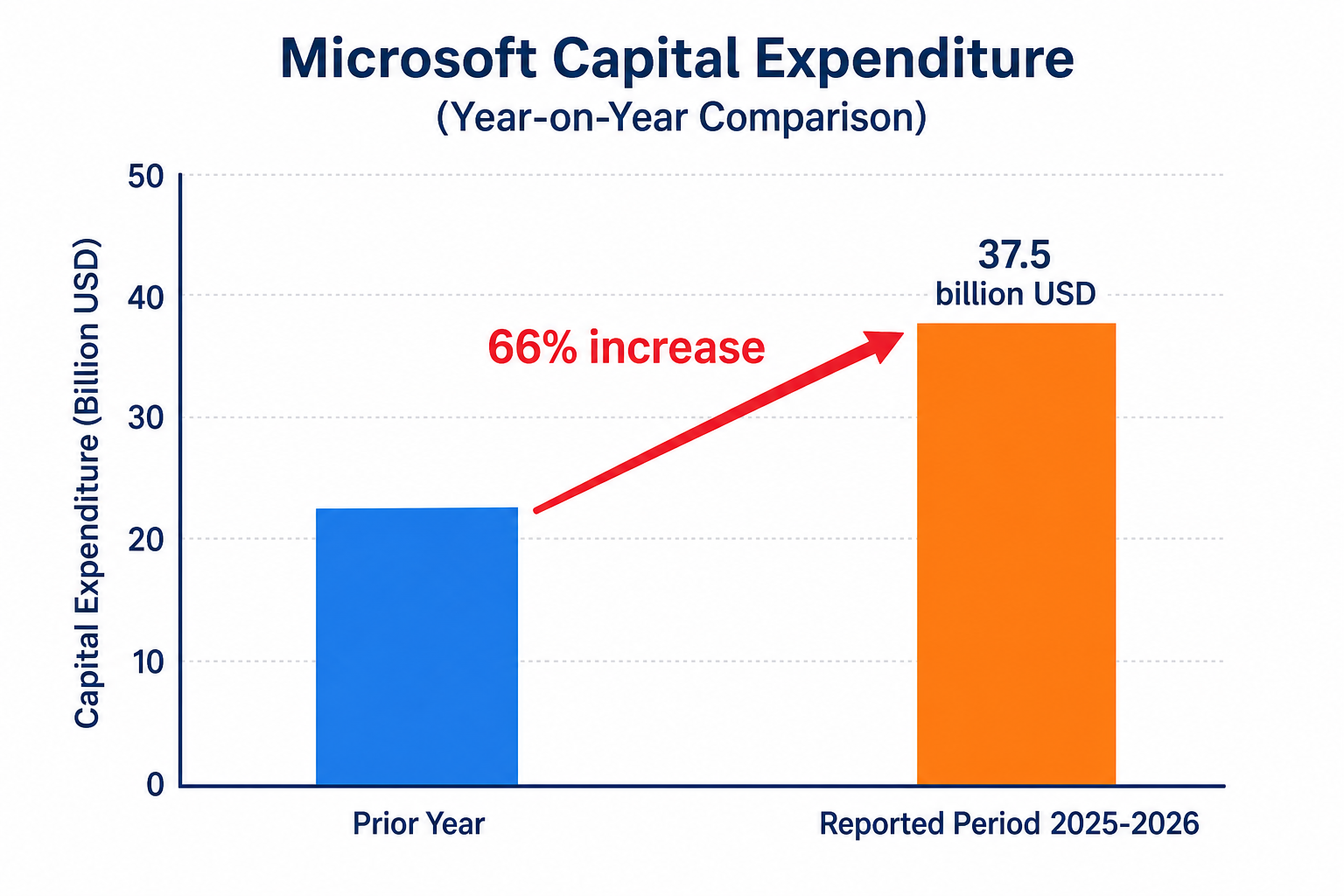
At the heart of the complaint are two linked allegations. First, that Azure’s growth was slowing faster than Microsoft had signalled, partly because AI workloads were consuming computing capacity that could otherwise have served paying cloud customers. Second, that Microsoft’s capital expenditure had surged to extraordinary levels without adequate disclosure of the associated risks. According to court filings reported by Dealroom, Microsoft’s capital spending reached $37.5 billion — up nearly 66% year-on-year — during the relevant period. Shareholders argue they were left in the dark about how that spending would compress margins.
The January 2026 Earnings Shock That Triggered the Azure Cloud Lawsuit
The catalyst for the lawsuit was Microsoft’s January 2026 earnings report. When the company acknowledged Azure’s deceleration and disclosed the full scale of its AI capital expenditure, the market reacted sharply. As reported by Yahoo Finance, the earnings release triggered a 10% single-day stock plunge, erasing approximately $357 billion in Microsoft’s market capitalisation in one session. That is one of the largest single-day value destructions in corporate history, and it instantly drew the attention of class-action attorneys.
Microsoft has not publicly admitted any wrongdoing and, notably, its stock has recovered some ground since the lawsuit was filed — suggesting the market views the legal risk as manageable. Nevertheless, the allegations raise important structural questions about how Microsoft is balancing its AI ambitions against its obligations to investors and, indirectly, to the businesses and consumers who depend on its products.
Microsoft AI Spending: How Big Is the Bet?
To understand the lawsuit, you need to appreciate the sheer scale of Microsoft’s AI infrastructure commitment. The company has poured billions into data centres, custom silicon (including its own Maia AI chips), and a deepened partnership with OpenAI. The argument from Microsoft’s leadership has consistently been that this spending is essential to win the AI era — that short-term cost pressure buys long-term competitive advantage through Azure AI services, Copilot features, and enterprise cloud contracts.
Critics within the shareholder community counter that the pace of spending outran the pace of monetisation. AI features bundled into Microsoft 365 via Copilot require enormous compute to run, and the lawsuit alleges that internal capacity constraints — not external demand weakness — were the real reason Azure growth rates disappointed. In other words, Microsoft may have been building infrastructure faster than it could turn that infrastructure into reliable revenue.
-
Capital expenditure: $37.5 billion in the disputed period, up ~66% year-on-year
-
Market cap erased in one day: ~$357 billion following the January 2026 earnings miss
-
Class period: 1 May 2025 – 28 January 2026
-
Lead plaintiff: St. Clair Shores, Michigan police and fire pension fund
-
Venue: Seattle federal court, filed June 2026
What This Means for Microsoft 365 Costs Going Forward
For ordinary users and businesses, the most practical question is straightforward: will Microsoft 365 costs go up, down, or sideways as this legal and financial pressure plays out? There are a few realistic scenarios worth considering.
Scenario 1 — Costs Stay High or Rise Further
If Microsoft doubles down on its AI investment thesis and argues that the market is simply misunderstanding a long-cycle bet, expect no let-up in subscription price increases. Microsoft has already raised Microsoft 365 commercial prices multiple times since 2022, and bundling Copilot AI features into higher-tier plans has been a key part of its upsell strategy. More infrastructure spending means more pressure to monetise that infrastructure through higher-priced plans.
Scenario 2 — A Spending Correction Brings Breathing Room
The lawsuit — combined with broader investor scrutiny across the tech sector about AI ROI — could prompt Microsoft to slow its capex growth rate and focus on demonstrating cleaner returns. If that happens, the company may find it harder to justify further subscription price hikes to enterprise customers, which could stabilise or even moderate Microsoft 365 costs over the medium term.
Scenario 3 — Licence Model Shifts
One underappreciated possibility is a structural shift away from all-in-one subscription bundles toward more modular or feature-tiered pricing. As the lawsuit spotlights the cost of AI features like Copilot, Microsoft may face pressure to let customers opt in or out of AI capabilities rather than bundling them universally — which could actually reduce costs for users who don’t want or need the AI layer.
Why Microsoft 365 Costs Are Already a Pain Point
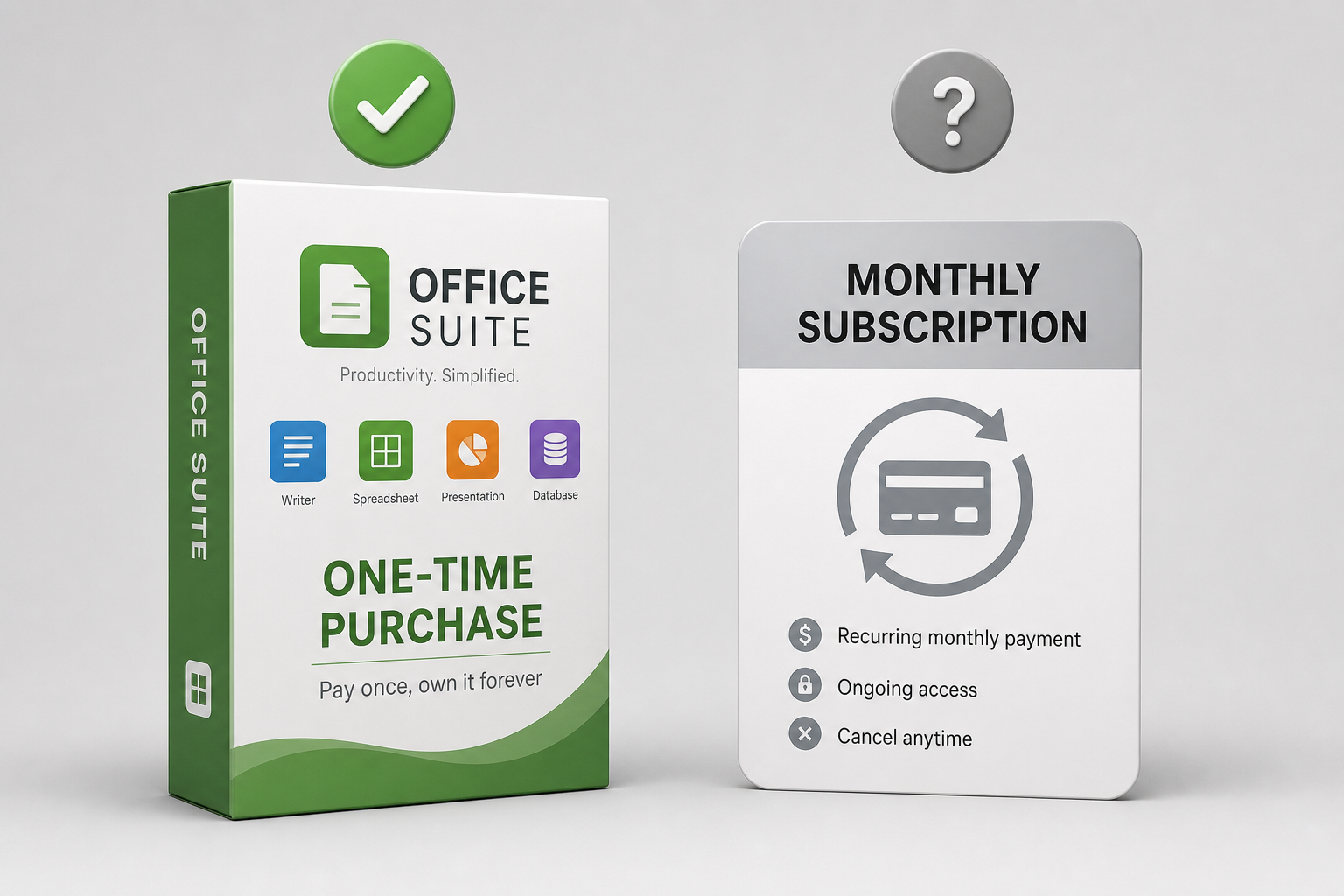
Even before the shareholder lawsuit became public, the trajectory of Microsoft 365 costs was already a concern for budget-conscious users and IT managers. The subscription model means ongoing recurring fees, price increases compound over years, and not every user needs the full Copilot-enabled suite. This is exactly why many home users, students, and small businesses look at one-time-purchase Office licences as a practical alternative — you pay once, you own the software outright, and you are not exposed to the next round of subscription increases driven by AI infrastructure bills.
At ShopKeyOnline, you can find perpetual Microsoft Office licences that sidestep the subscription treadmill entirely. For example, Microsoft Office 2024 Pro Plus for Windows is available for a one-off payment, giving you the full desktop suite without a monthly fee — a compelling option if the Microsoft AI spending row and rising 365 prices have you questioning the value of a subscription. Alternatively, if you want a bundled deal, the Windows 11 Pro + Office 2024 Pro Plus Bundle combines both licences at a reduced combined price.
The Broader Question: Is Microsoft’s AI Bet Sustainable?
The Azure cloud lawsuit sits within a wider debate about whether the AI infrastructure spending race across the big tech companies is financially rational. Microsoft, Google, Amazon, and Meta have collectively committed hundreds of billions to AI data centre buildouts, and analysts are increasingly asking when — or whether — those investments will generate returns commensurate with the outlay. The Reuters report on the lawsuit noted that it is common for shareholders to sue companies after large earnings-driven stock drops, which means the case may settle without any admission of fault. But the underlying question — was Microsoft transparent enough about the risks it was taking with shareholder capital? — is one the company will need to answer credibly regardless of the legal outcome.
For the tech industry at large, the lawsuit is a signal that the era of unchallenged AI spending narratives may be coming to an end. Investors are beginning to demand clearer timelines, clearer ROI metrics, and clearer disclosure when things are not going to plan. That discipline, if it takes hold, could ultimately benefit end users by making AI feature pricing more reflective of actual delivered value rather than speculative infrastructure bets.
How to Protect Your Software Budget Amid Microsoft 365 Cost Uncertainty
Whether you are a business IT buyer or a home user, the practical lesson from the shareholder lawsuit saga is that tying your entire productivity setup to a single vendor’s subscription model carries real cost risk — especially when that vendor is in the middle of a high-stakes AI spending cycle. Here are some concrete steps to manage that risk.
-
Audit what you actually use: Many Microsoft 365 subscribers pay for features — Teams Phone, Power BI, Copilot — they rarely touch. Strip back to the plan tier that matches actual usage.
-
Consider perpetual licences: For users who primarily need Word, Excel, PowerPoint, and Outlook, a one-time-purchase Office 2024 licence delivers everything needed without subscription exposure. You can explore the full Microsoft Office licence range at ShopKeyOnline.
-
Lock in pricing now: If subscription prices are going to rise further, locking in an annual plan before a price adjustment (or switching to perpetual) can save meaningful money over a multi-year horizon.
-
Watch the lawsuit closely: A settlement or court ruling that forces greater Microsoft disclosure could change how AI features are priced and bundled — stay informed so you can react quickly.
FAQ: Microsoft 365 Shareholder Lawsuit and AI Spending
What is the Microsoft shareholder lawsuit actually about?
Shareholders allege that Microsoft misled investors by failing to disclose that Azure cloud growth was slowing significantly and that AI infrastructure spending was rising far faster than revenues could absorb. The lawsuit covers the period from May 2025 to January 2026 and was filed in Seattle federal court in June 2026.
How does Microsoft AI spending relate to Microsoft 365 costs?
Microsoft funds its AI infrastructure partly through revenue from Microsoft 365 subscriptions and Azure services. When AI spending outpaces monetisation, there is pressure on the company to raise subscription prices or introduce higher-tier AI-bundled plans to recover costs. That direct link is why rising Microsoft AI spending is relevant to anyone paying a monthly or annual 365 fee.
Could the Azure cloud lawsuit force Microsoft to cut prices?
It is unlikely to directly force price cuts, but investor pressure stemming from the lawsuit could encourage Microsoft to slow its capex growth rate, improve transparency about AI feature ROI, and reconsider aggressive bundling strategies. Moderating spending growth could reduce upward pressure on subscription pricing over the medium term.
Is there an alternative to a Microsoft 365 subscription?
Yes. Perpetual (one-time-purchase) Microsoft Office licences give you the core desktop apps — Word, Excel, PowerPoint, Outlook — without any ongoing subscription fee. They do not include cloud-only features like Copilot AI or Teams, but for users who don’t rely on those, they are a cost-effective and price-stable alternative. ShopKeyOnline stocks a wide range of perpetual Office licences including Office 2024 Pro Plus.
What happened to Microsoft’s stock when the AI spending issues emerged?
Microsoft’s January 2026 earnings report — which acknowledged Azure’s deceleration and the full scale of its AI capital expenditure — triggered a roughly 10% single-day stock price drop, erasing around $357 billion in market capitalisation. That stock event was the direct catalyst for the class-action shareholder lawsuit filed in June 2026.
